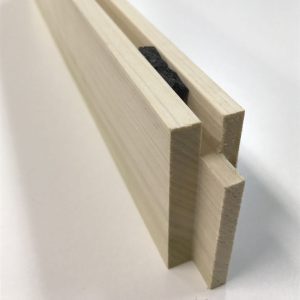
Anatomy of a Door
Understanding the anatomy of a cabinet door helps you make informed decisions about your project. We have put together this visual guide to the parts of a cabinet door including stiles, rails, panels and frame construction details. Learning cabinet door parts names and how they work together will help you better understand our door styles and customization options. Our engineered doors, slab style doors and all MDF door options will not use the same details shown on this page, this guide focuses on our frame and panel door construction.
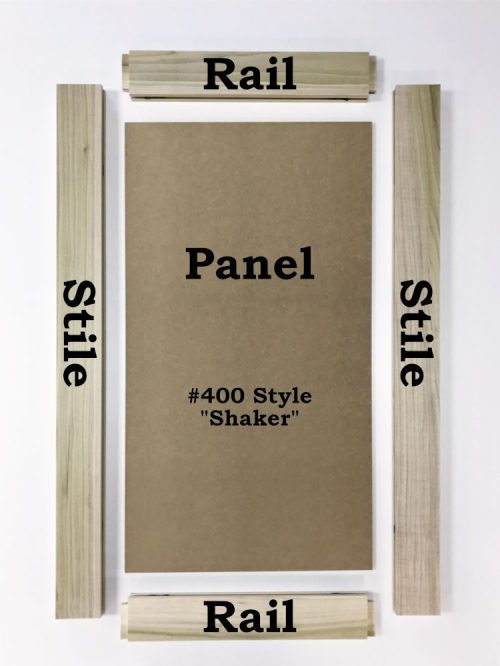
Anatomy of a Cabinet Door
Above includes unassembled shaker door parts that utilizes the five piece frame and panel construction method. There are four frame pieces and one panel. This door will eventually be assembled so that the panel is contained securely within the four frame pieces.
To the left and right side of the door panel we have “Stiles” which run vertically from the very top to the very bottom. Above and below the panel we have “Rails” which do not run the full width of the door but rather are made to fit within the left and right Stiles using tongue and groove construction.
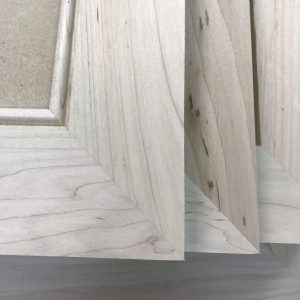
Some of our doors are made with mitered corners. You can see the difference with the images below between what a mitered corner and a standard corner joint on the frame of the door looks like.
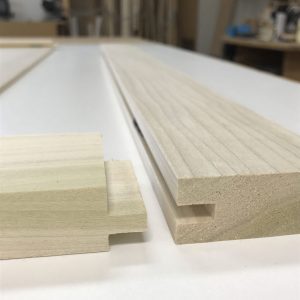
Above on the right image we see the future joint between the bottom rail and right stile. This style of door has tongue and groove construction. Scherr’s builds all of its frame and panel style doors with some form of interlocking ‘cope and stick’ and in this case ‘tongue and groove’ joinery. We use no metal fasteners in our door frames. We use wood and glue for the most stable and long lasting option you get for door joints.